

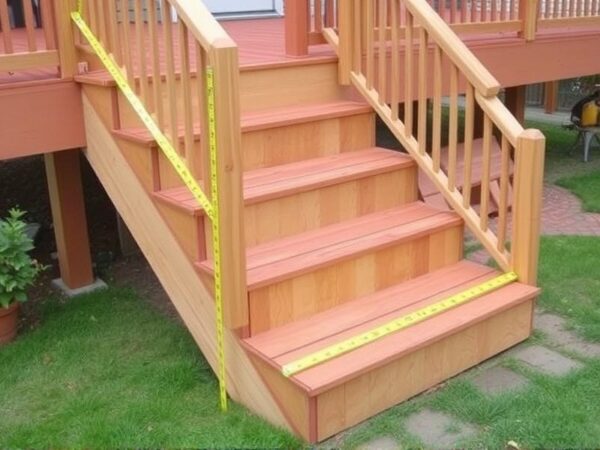
Ultimate Guide: How to Measure for Deck Stairs Accurately (Without Losing Your Mind)
Let’s Start With Why This Matters
Ever seen deck stairs that look like they belong in a funhouse? Crooked steps, awkward spacing, that one tread that’s secretly trying to trip you? Nine times out of ten, it comes down to rushed measuring. I’ve helped dozens of homeowners fix “quick and easy” stair projects gone wrong, and let me tell you – taking precise measurements upfront saves headaches (and potentially medical bills) later.
What You’ll Need to Measure Deck Stairs
Grab these before climbing the ladder:
– A decent tape measure (the 25-footer you’ve had since college works)
– A 4-foot level – don’t try to eyeball this
– Notebook and pencil (yes, actual paper – phones die)
– Calculator (your phone’s okay here)
– A friend (optional but highly recommended)
The Measurement Dance: Rise and Run
Here’s where most DIYers slip up. You need two magic numbers:
Total Rise: Vertical distance from ground to deck surface. Pro tip: Measure from the finished deck surface, not the frame. That composite decking adds about an inch you can’t ignore.
Total Run: Horizontal space your stairs will occupy. Got flower beds or AC units in the way? Now’s the time to notice.
Stair Math Made (Almost) Painless
Let’s say your deck sits about 30″ above the patio. Divide that total rise by 7 (ideal step height). 30 ÷ 7 ≈ 4.28 steps. Since we can’t build a 0.28 step, round to 4 steps. Now recalculate: 30″ ÷ 4 = 7.5″ per rise. Perfect!
For tread depth? Shoot for 11″ – deep enough for size 12 boots but not so deep you need a running start. Local codes might specify exact numbers though – check those!
Code Compliance: Not Just Red Tape
Your local building department isn’t trying to ruin your fun. Standard requirements:
– Maximum 7-3/4″ rise
– Minimum 10″ tread depth
– Less than 3/8″ variation between step heights
Fun story: Last summer I inspected stairs where the top step was a full inch shorter than others. Homeowner claimed it was “ergonomic.” Inspector called it a lawsuit waiting to happen.
Material Matters: Wood vs Composite
Pressure-treated lumber shrinks about 1/4″ as it dries. Composite? Stays put. For wood stairs, I add an extra 1/8″ per step – like leaving room for jeans to shrink in the dryer. Here’s a quick comparison:
Wood: Cheaper upfront, needs annual maintenance, expands/contracts with weather
Composite: Higher initial cost, virtually maintenance-free, stable dimensions
5 Mistakes That’ll Wreck Your Measurements
1. Measuring on uneven ground (grass and slopes lie)
2. Forgetting to account for railings
3. Assuming all step materials behave the same
4. Ignoring that bottom step’s ground contact
5. Using a warped board as a straight edge
When to Call a Pro
If your deck is over 30″ high or needs more than 3 steps, seriously consider getting help. I once helped a client whose “simple” 4-step project turned into rebuilding the entire deck frame. Sometimes that $200 consultation saves $2,000 in repairs.
FAQs: What Everyone Asks
Q: Can I use my phone’s level app?
A: Only if you enjoy redoing work. Spend the $15 on a real level.
Q: How much space between stairs and house?
A: Leave at least 3″ for drainage and expansion – your siding will thank you.
Q: What if my measurements don’t match the code?
A: Adjust the number of steps. One extra step can make all the difference.
Final Pro Tip
Measure twice, cut once is for amateurs. Measure three times, then have your neighbor check. Stair building reveals all measurement sins – better to catch them when pencil marks still erase easily!



Reviews
There are no reviews yet.