

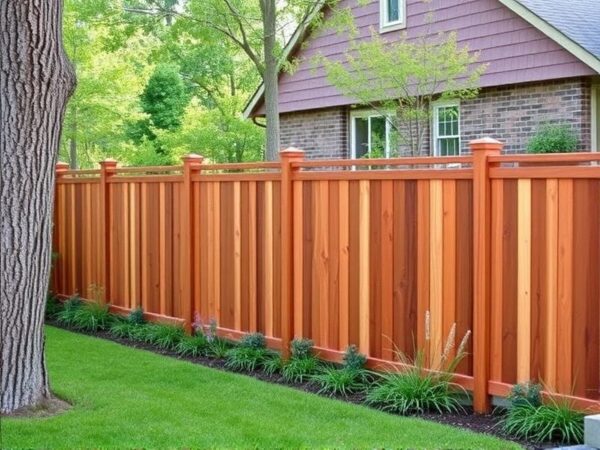
Premium Redwood Fences: Natural Beauty & Long-Lasting Durability
Why Redwood Outshines Other Fencing Materials
Let’s cut to the chase – when you’re investing in a fence, you want something that looks great today and still holds up a decade later. That’s where redwood steps into the spotlight. Unlike its cousins cedar and pine, redwood comes packing natural superpowers. Its heartwood contains tannins and oils that make termites shrug and say “no thanks,” while rot fungi can’t get a foothold. I’ve seen redwood fences along the Oregon coast that weathered salty ocean spray for 15 years without a single rotten board – try that with pressure-treated pine!
The Earth-Friendly Choice You Can Feel Good About
Here’s something most contractors won’t tell you: that “maintenance-free” composite fencing? It’s basically plastic with a wood flour filler. Redwood grows on trees (literally!) and breaks down naturally at the end of its life. We recently checked in with a Bay Area homeowner who installed redwood fencing in 2012 – not only is it still standing strong, but the property’s drainage patterns haven’t changed because the wood hasn’t leaked any chemicals into the soil.
Keeping Up Appearances (Without the Headache)
Okay, let’s talk maintenance. Redwood isn’t completely hands-off, but it’s way easier than you’d think. A client in Colorado Springs learned this the hard way – they skipped staining for the first three years and ended up with that silvery-gray patina everyone either loves or hates. Pro tip: If you want to maintain that warm reddish hue, hit it with a penetrating oil stain every 2-3 years. But here’s the kicker – even if you let it go natural, the structural integrity stays rock solid.
Design Flexibility That Matches Your Vision
Remember that Pinterest board full of fence ideas you’ve been saving? Redwood can handle it. From crisp horizontal slats to rustic split-rail designs, this material plays nice with every style. Last summer, we helped a customer near Lake Tahoe create a 6-foot privacy fence with alternating board widths that looked like something out of a luxury resort. The best part? They used standard-grade redwood but stained it to match clear-grade stock, saving nearly 40% on materials.
Real-World Performance: By the Numbers
Let’s stack redwood up against the competition:
| Feature | Redwood | Cedar | Treated Pine |
|---|---|---|---|
| Natural Rot Resistance | Excellent | Good | Poor (needs chemicals) |
| Typical Lifespan | 25-40 years | 15-25 years | 10-15 years |
| Cost per Linear Foot | $$ | $$ | $ |
Installation Tricks for Tricky Terrains
Working with heavy clay soil? Sandy coastal ground? Here’s the dirt from our field crew: For clay areas, we always use concrete footings that extend above grade to prevent water wicking. In sandy soils, helical anchors provide crazy good stability – we used them on a Malibu cliffside property and those redwood panels are still straight as an arrow after eight years of Santa Ana winds.
When Redwood Really Earns Its Keep
Think redwood’s just for fancy estates? Think again. That split-rail fence keeping deer out of your veggie garden? Redwood’s your friend. Need to contain an enthusiastic golden retriever? Redwood stands up to… enthusiastic greetings. We even did a vineyard in Sonoma where the redwood posts double-trained grapevines – 12 years later, both the vines and fence are thriving.
Sustainability That Actually Means Something
Here’s where it gets cool – responsible redwood producers are growing more trees than they harvest. One mill we work with plants three saplings for every mature tree cut. And get this – redwood forests actually store more carbon per acre than tropical rainforests. When you choose certified redwood, you’re basically getting a carbon-negative fence. How many home improvement projects can say that?
Making Your Redwood Fence Last a Lifetime
Want the secret to maximizing your investment? It’s all in the details. Always leave a small gap between boards for expansion – I’ve seen more fences ruined by tight installation than actual rot. For coastal areas, go with stainless steel fasteners to prevent ugly black stains. And if you’re in a fire-prone area? A client in Boulder saved their home during a wildfire because their thick redwood boards resisted ember penetration better than vinyl fencing.
The Verdict From Real Homeowners
Don’t take our word for it – check out these real experiences:
- “Our redwood fence survived three Nor’easters without a wobble” – Martha, Cape Cod
- “Best decision ever – it aged beautifully and increased our curb appeal” – James, Austin
- “Even after my kid’s baseball practice sessions, the panels still look new” – Sarah, Portland
Your Next Steps
Ready to join the redwood revolution? Start by measuring your space – but leave the rest to the pros. Most suppliers offer free estimating tools online. And remember: while redwood costs more upfront, you’ll save big on replacements and repairs down the line. One last tip – ask your supplier about “construction heart” grade for hidden structural pieces to balance quality and cost.

Reviews
There are no reviews yet.